
1.Gaming & Play-to-Earn apps – earn rewards through idle gameplay and in-game farming (e.g., Mistplay, Coin Master, Clash of Clans).
2.Reward & GPT apps – complete surveys, watch ads, or try apps for cash (e.g., InboxDollars, Swagbucks, AttaPoll).
3.Short video apps – earn points or cash by watching and interacting with content (e.g., SnackVideo/Kwai, YouTube Shorts Fund, Melolo).
There are two main types of phone farms:
Physical Phone Farms – offer realistic hardware support but are costly, complex to maintain, and have limited scalability.
Cloud Phone Farms – provide an isolated virtual devices environment, centralized management, and easy scalability, ideal for automation.
VMOS Cloud is an ideal cloud phone solution for phone farmers to build smart phone farm. It provides isolated environments, robust anti-detection capabilities, effective multi-account management and easy to scale. In addition, with bulk operations, synchronization, AI-driven automation and VMOS API, users can automate repetitive tasks to streamline workflows and management to ensure high-efficient phone farms, maximizing revenue while minimizing detection risk.
In modern mobile marketing and management, phone farms have become a crucial tool for improving efficiency and revenue. However, traditional physical phone farms are not only costly but also face challenges such as complex maintenance and low scalability. Cloud Phone is emerging as the best solution for automating phone farms. This article will introduce the key features of phone farms, application scenarios, and how to better automate phone farms using cloud phones.
What is Phone Farm?
A phone farm is a systematic operation that automates tasks or runs applications by centrally managing a large number of mobile devices or environments. These devices are connected to a central control system via a network for batch processing of repetitive tasks such as app testing, ad clicking, trial apps download, mobile promotion, reward task collection, social media management, and multi-account management.
Equipment scaling: Phone farms are able to control and monitor multiple devices simultaneously, improving efficiency through centralized management and synchronized operation.
Automation: Integration with scripts, automation tools or cloud phone platforms, devices can automatically perform preset tasks, such as app clicks, registration, check-ins, likes or content publishing, reducing human intervention.
Environment isolation: Each device or environment has its own independent operating system, storage space and device information. And it allows users to assign unique IP addresses, proxies, or VPNs to each device which makes multi-account management or task execution independent of each other and reduces the risk of being detected.
Centralized task management: Modern mobile phone farms are usually integrated with third-party tools such as cloud phones, which support centralized management of devices through PC or cloud control panels, enabling batch command issuance, data collection and real-time monitoring.
Most profitable application categories for phone farming in 2026
1. Gaming & Play-to-Earn applications
Earn rewards automatically through in-game farming or staking. Get virtual currency through idle gameplay, daily tasks, or sign-in rewards, which can then be converted into cash or digital assets.
Popular Examples:
Mistplay: Earn points by playing games, redeemable for gift cards or cash.
Coin Master: Earn coins through spins, card collection, and missions, suitable for idle farming.
Clash of Clans: Long-term resource accumulation with multiple accounts can be automated by phone farm.
2. Reward & GPT (Get Paid To) apps
Complete small tasks, surveys, watch ads, or try apps to earn cash rewards.
Popular Examples:
InboxDollars: Earn cash by completing surveys, watching videos, and playing games; supports multiple automation-friendly tasks for phone farming.
Swagbucks: Complete surveys, shopping rebates, and watch videos to earn points.
AttaPoll: Participate in surveys to earn cash rewards; mobile-friendly and compatible with multi-account management for higher passive income.
3. Short video apps
Earn points or cash by watching videos, liking, commenting, or completing daily tasks.
Popular Examples:
SnackVideo / Kwai: Watch ads, complete tasks, and share content to earn cash.
YouTube Shorts Fund: Creators earn based on views and engagement of short videos.
Melolo: Watch short videos and complete interactive tasks to earn points or cash rewards, suitable for automated phone farms.
Physical Phone Farm vs Cloud Phone Farm: The Real Comparison
Physical Phone Farm: A shelve or workspace with mobile phones connected to the central management computer via USB hubs or LAN. It requires manually completing tasks on each device or using ADB (Android Debug Bridge)/third-party management tools to control devices in batches.
Pros:
With authentic mobile phones, it operates in a more realistic environment.
Suitable for tasks requiring hardware support (such as cameras, GPS).
Hands-on with actual hardware you own and tweak. Total control over every detail
Cons:
High costs: Installing mobile phones, space required and electricity consumption
Complex maintenance: Equipment prone to wear and tear. If running 24/7, phones will generate heat, which may reduce device lifespan or cause malfunctions. Maintenance is time-consuming and expensive.
Low scalability: With the growth of devices, manual management of a phone farm becomes impractical. It is tedious and time-intensive which led to the slowing expansion and increasing labor.
Cloud Phone Farm: A cloud phone is a real Android environment that runs entirely on a cloud server and can be accessed remotely.
Pros:
High scalability: Not limited to local devices. You can increase/manage the amount of devices as needed.
Isolated environment: Each instance has an independent environment with unique parameters: device model, Android system, SIM, IMEI, storage, etc.
Easy to centrally manage and automate tasks
Cons:
Different packages are available, and you will need to pay a renewal fee to extend cloud service.
Cloud machines are hosted on cloud servers, and network latency may affect real-time operations.
How to Start a Smart Phone Farming on VMOSCloud?
VMOS Cloud will be your best cloud phone solution to make a smart phone farm.
It is an Android cloud phone solution with anti-detection capabilities, capable of running multiple fingerprint-isolated virtual phones simultaneously.
Easy to scale: Supports managing multiple devices from a single control console. There are no restrictions on creating new instances.
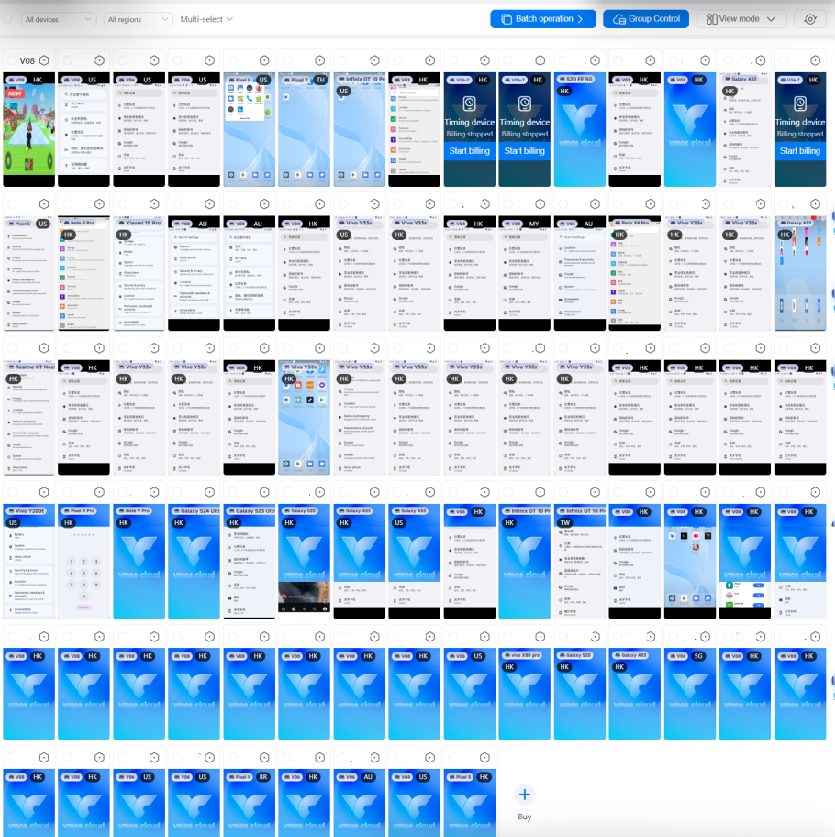
Bulk your actions across all android devices at once to phone farm. Only one device can control multiple cloud phones at the same time. Every change made on the main device will be instantly reflected on other devices.
VMOS Cloud is empowered by AI and phone farmers can automate phone farms with AI workflow, automation tool integration.
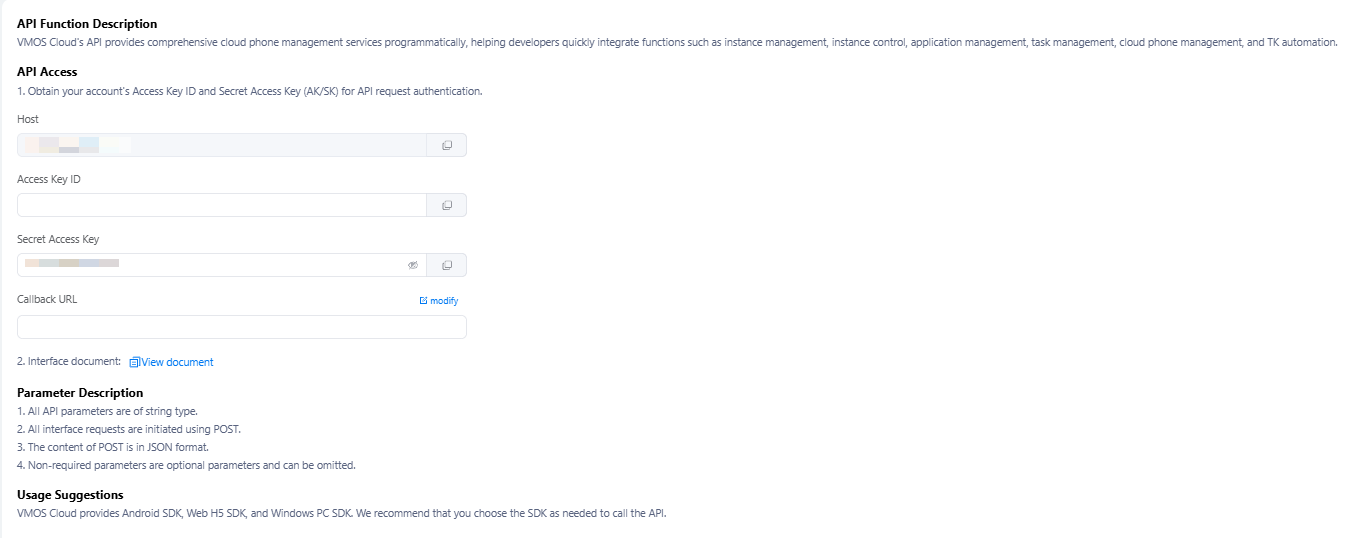
VMOS Cloud API provides powerful, stable, and efficient data interfaces to help developers quickly integrate instance management, instance control, app management, task management, cloud phone management, and TK automation, greatly improving development efficiency and making cloud phone applications smarter and more convenient.
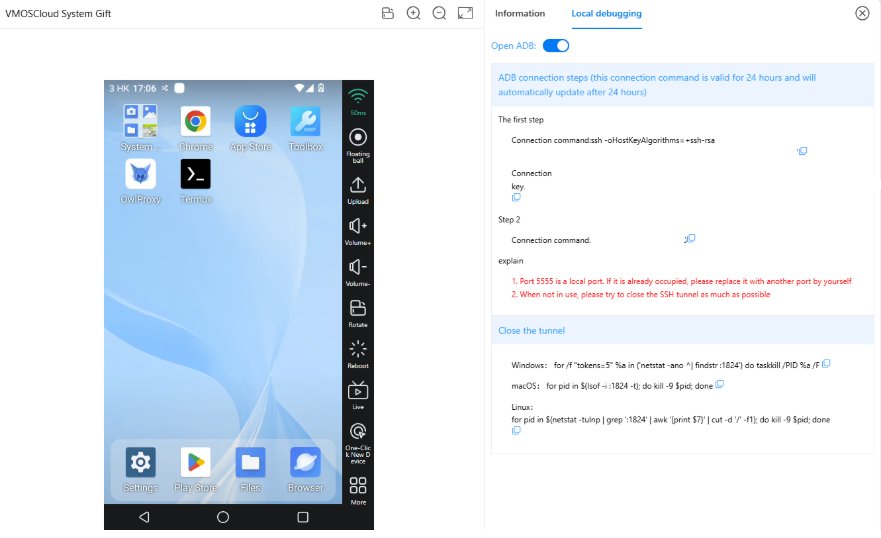
ADB remote debug via SSH tunneling is feasible on VMOS Cloud.
VMOS Cloud allows you to assign independent proxy IPs to different devices, greatly enhancing the ability to resist detection and risks.